Wednesday, February 4, 2009

Ribosome

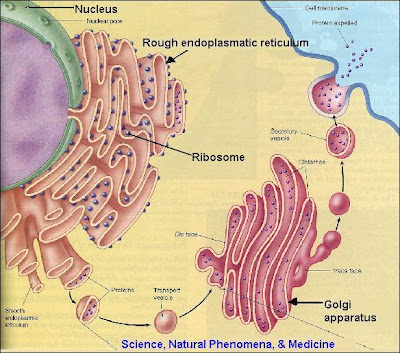
Ribosomes are the protein-synthesizing organelles of the cell. Ribosomes are about 20nm in diameter and are composed of 65% ribosomal RNA and 35% ribosomal proteins, known as a Ribonucleoprotein or RNP. Free ribosomes are suspended in the cytosol, which is the semi-fluid portion of the cytoplasm; others are bound to the rough endoplasmic reticulum, giving it the appearance of roughness and thus its name.

The ribosome functions in the expression of the genetic code from nucleic acid into protein, in a process called translation. Ribosomes do this by catalyzing the assembly of individual amino acids into polypeptide chains; this involves binding a messenger RNA and then using this as a template to join together the correct sequence of amino acids.

Ribosomes were first observed in the mid-1950s by Romanian cell biologist George Palade using an electron microscope as dense particles or granules for which he would win the Nobel Prize. The term "ribosome" was proposed by scientist Richard B. Roberts in 1958.
Tuesday, February 3, 2009

Endoplasmatic Reticulum

The endoplasmatic reticulum is a cell organelle which forms an interconnected network of tubules, vesicles, and cisternae held together by the cytoskeleton within cytoplasm. They play an important role in the synthesis of lipids and proteins to be used in the cell membrane or to be secreted from the cell.

The endoplasmatic reticulum also fulfills other specialized functions to such as sequestration of calcium, and production and storage of glycogen, steroids, and other macromolecules. There are two types of endoplasmatic reticulum: smooth and rough.

Smooth endoplasmatic reticulum is the site of synthesis and digestion of fatty acids and phospholipids. In the liver it is used to modify dangerous chemicals. Rough ER is the site of manufacture of secretory proteins as well as proteins destined to be inserted in the cell membrane. It is rough because of the vast numbers of ribosomes which stud its surface. As these ribosomes build an amino acid chain, it is injected through the endoplasmatic reticulum into the vesicle.

The lacey membranes of the endoplasmic reticulum were first seen by Keith R. Porter, Albert Claude, and Ernest F. Fullam in 1945.